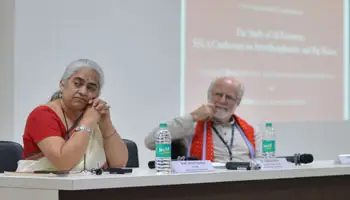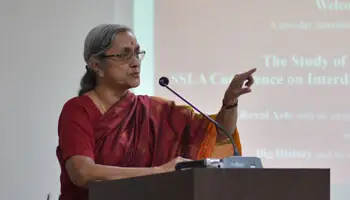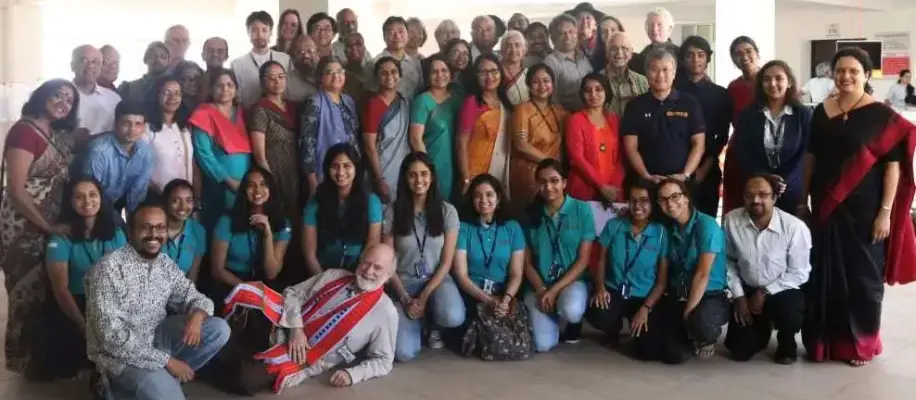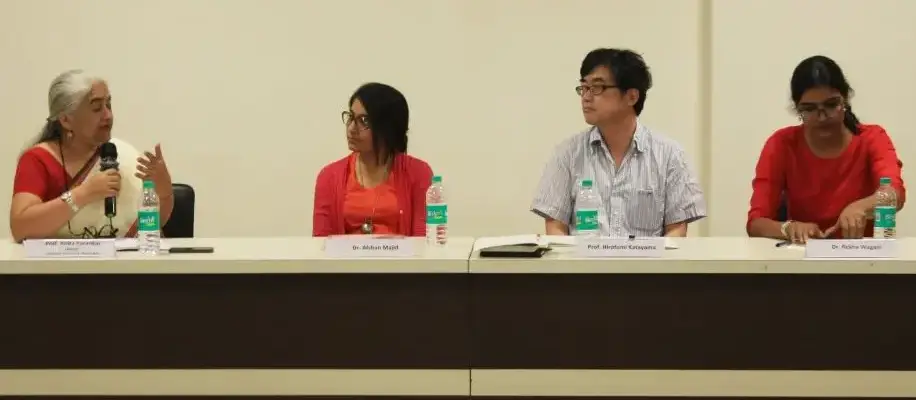


The International Gender Conference (IGC) is being organised annually at SSLA from 2019, and it is a forum that foregrounds feminist, queer and intersectional perspectives to interrogate gender in relation to contemporary social, political and economic transformations. The conference has evolved since 2019 into a sustained interdisciplinary space that links pedagogy, research and activism on gender justice. The IGC hosted in collaboration with long-term partners DePaul University, Chicago, and, more recently Montclair State University, New Jersey. From its inception in 2019, the International Gender Conference was conceived as a platform that brings together academia, the corporate sector and civil society to engage critically with gender. Over subsequent editions, SSLA has institutionalised the conference as an annual event, embedding it within its broader commitment to Women and Gender Studies, gender-sensitive teaching practices and campus initiatives such as a Scholar-in-Residence on gender-based violence and the student-led Queer Qrew.
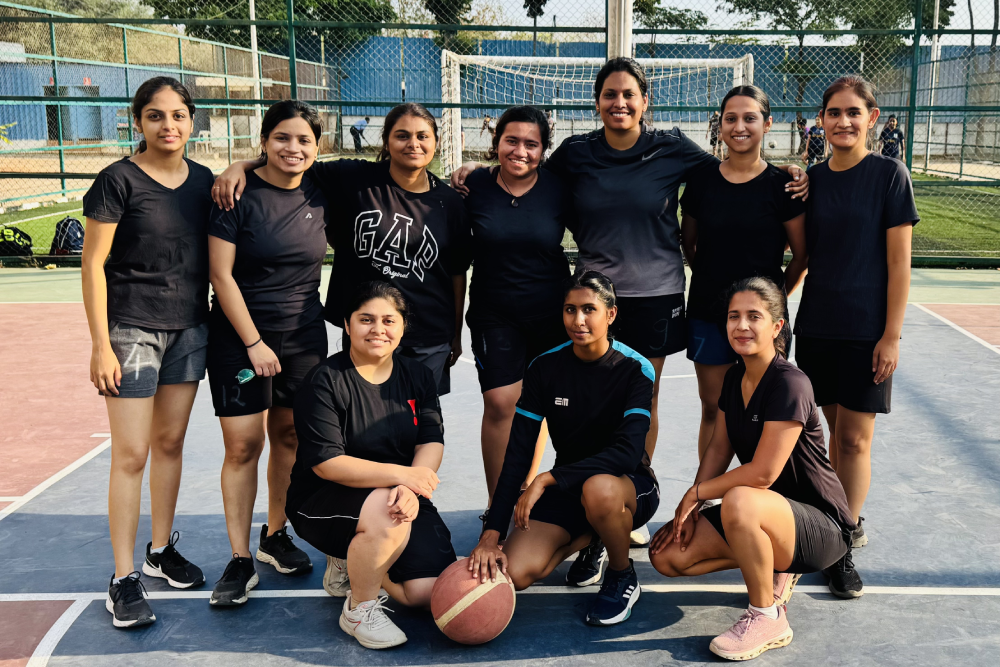
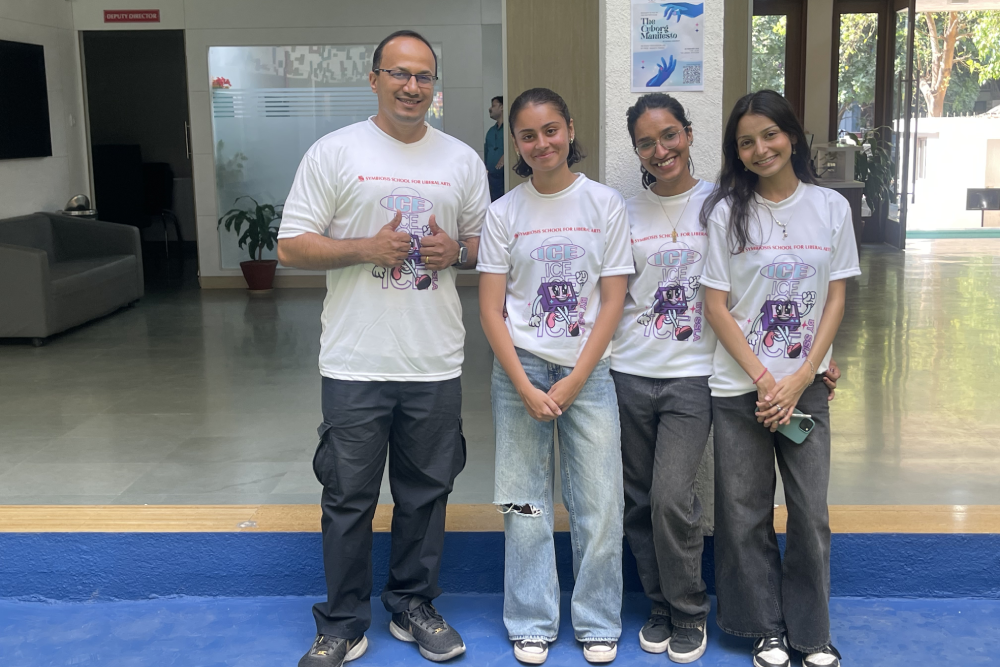
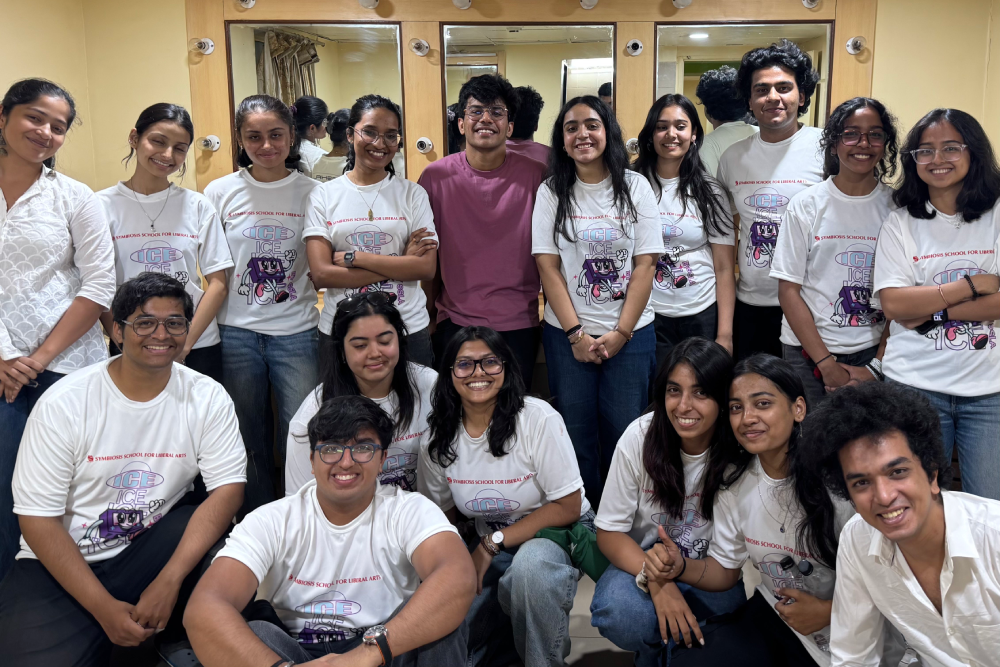
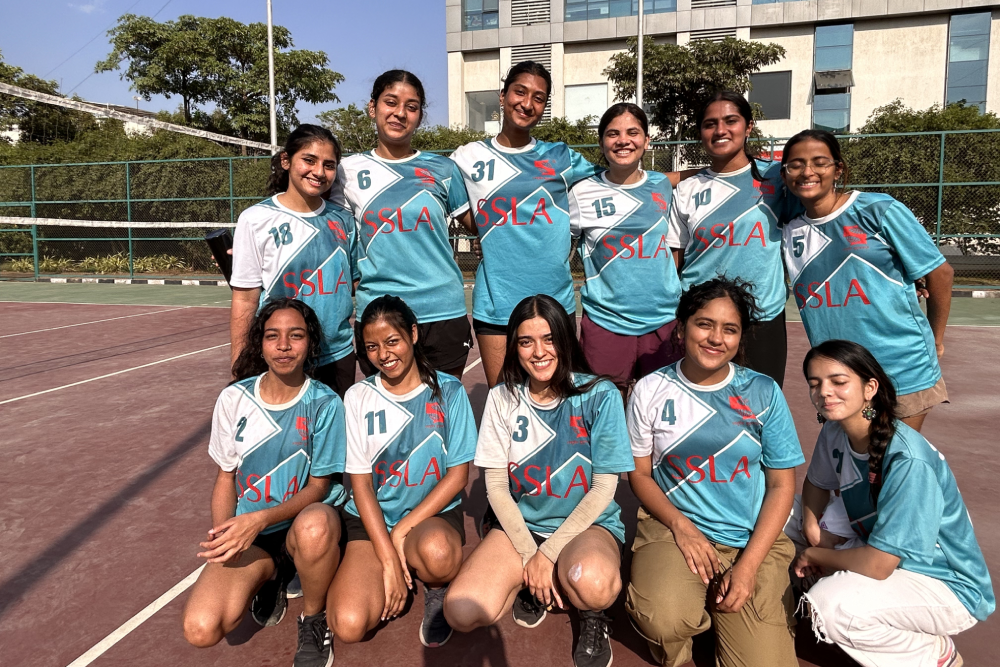

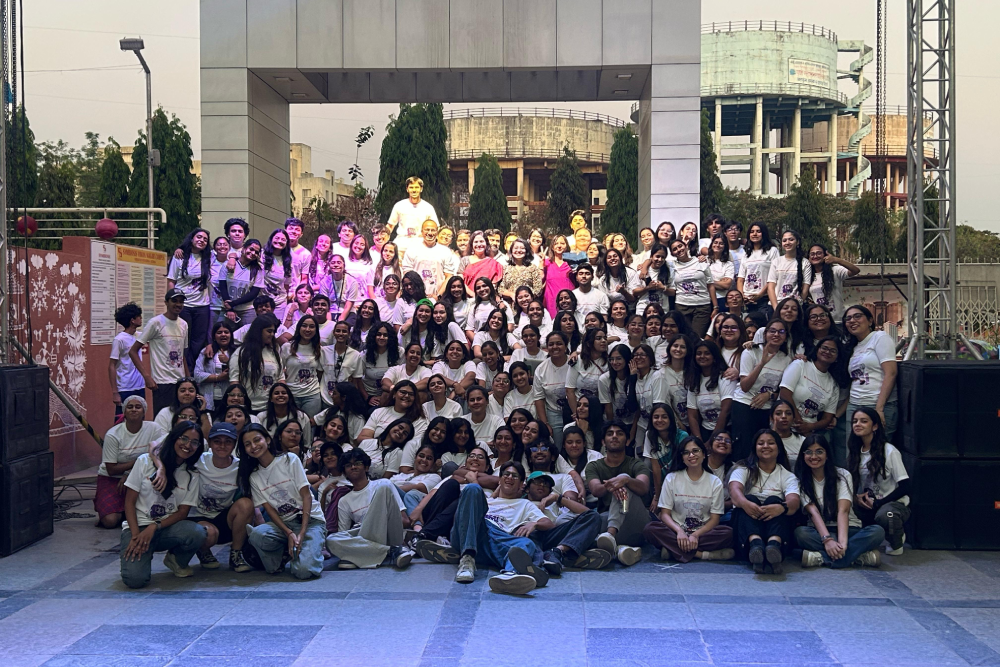
The sixth International Gender Conference (IGC-2024), held virtually on 1–2 March 2024, focused on “Bridging the Gap: Advancing Sustainability through Gender-Inclusive Solutions.” The conference foregrounds dialogic, interdisciplinary engagements to trace how gender shapes both the vulnerabilities produced by ecological crises and the possibilities for more just, sustainable futures.
The 5th Annual edition of the International Gender Conference, hosted by Symbiosis School for Liberal Arts, in collaboration with DePaul University, Chicago, held on the 3rd and 4th of March 2023, focused on the theme is 'Dialogues in Gender: Past and Present' and the conference aims to host discussions which trace gender through an interdisciplinary and historic lens. This conference aims to address issues on gender throughout history. A way to understand it would be to approach history that takes gender centrally into account. Notions of gender are not constant but are specific to time and place. Gender definition is always present, yet never static. Within a given time and place, the categories of masculinity, femininity or fluidity are in a process of being forged, disseminated, contested, reworked, and reaffirmed.
Fourth Annual International Gender Conference (IGC) hosted by SSLA was held in collaboration with SSLA's international academic partner, DePaul University, focused on ‘Men, Masculinities and Gender Equality’. It aimed to take a multidisciplinary approach to the theme of 'Men, Masculinities and Gender Equality'. The conference was held from the 3rd to the 5th of March, 2022. Contemporary gender theory underscores the importance of relationality in the production and maintenance of gender – relationality of men to women, between men, and between women. Studies of men and masculinity have provided rich and thoughtful inroads into theorizing and analyzing gender as relational. 'Men and masculinity' has subsequently become the subject of intense theorization. Through this conference, we explored theoretical/social conceptions of masculinities from multiple disciplines and also examined how masculinities (of men and women) intersect with other structural locations, including sexuality, class, caste, country, etc.
The third edition of IGC-2021 focused on 'Pandemic: A Gendered Experience' on 25th, 26th, and 27th March 2021. The conference brought light to how the pandemic has drastically increased the already-existing gap of gender inequality and its effects. While the pandemic has brought distress to all our lives, it has put migrants, older persons, sex workers and other minority groups at further risk. The three-day conference addressed issues affecting these groups and focused on the economic, social and legal ramifications of the pandemic from a gendered perspective.
The second edition of the International Gender Conference on the 7th and 8th of February 2020' focused on ‘Identity: Breaking Ground'. A multitude of disciplines define the term 'identity' in the context of their own knowledge base through terms rooted in the experience, accounts and evidence that is unique to each of them. This conference attempts to understand the way gender is experienced against the backdrop of burgeoning urbanity fuelled by industrialist-capitalist modernity and by post modernity resulting from globalization. Along with the growing need to consume, compete, and develop, a form of alienation is enveloping society in a global order that does not nurture, but only squeezes, to ensure the survival of the fittest.
The first edition of IGC focused on 'Revisiting, Reviewing, and Restructuring Spaces for Urban Women: A Dialogue Between Sectors for Empowering Urban Women Across the Globe on the 1st and 2nd of March 2019. It was a dynamic gathering of academia, the corporate sector, community-based organizations, researchers, and the development sector to discuss issues faced by Women in Urban Spaces, specific to the middle-class population. At this conference, ideas, concepts, and stories of transformation and success were exchanged through several discussions, panels, workshops, exhibitions, and papers with a view to creating a network for all concerned with issues faced by women in urban spaces. The conference began with the SSLA-Sage Public Lecture, (co-hosted by Sage Publications) on 28 February 2019. The two-day conference worked towards revisiting and reviewing the socio-cultural challenges faced by urban women. This helped in realising our responsibility and will enable us to act towards restructuring these spaces as we progress.
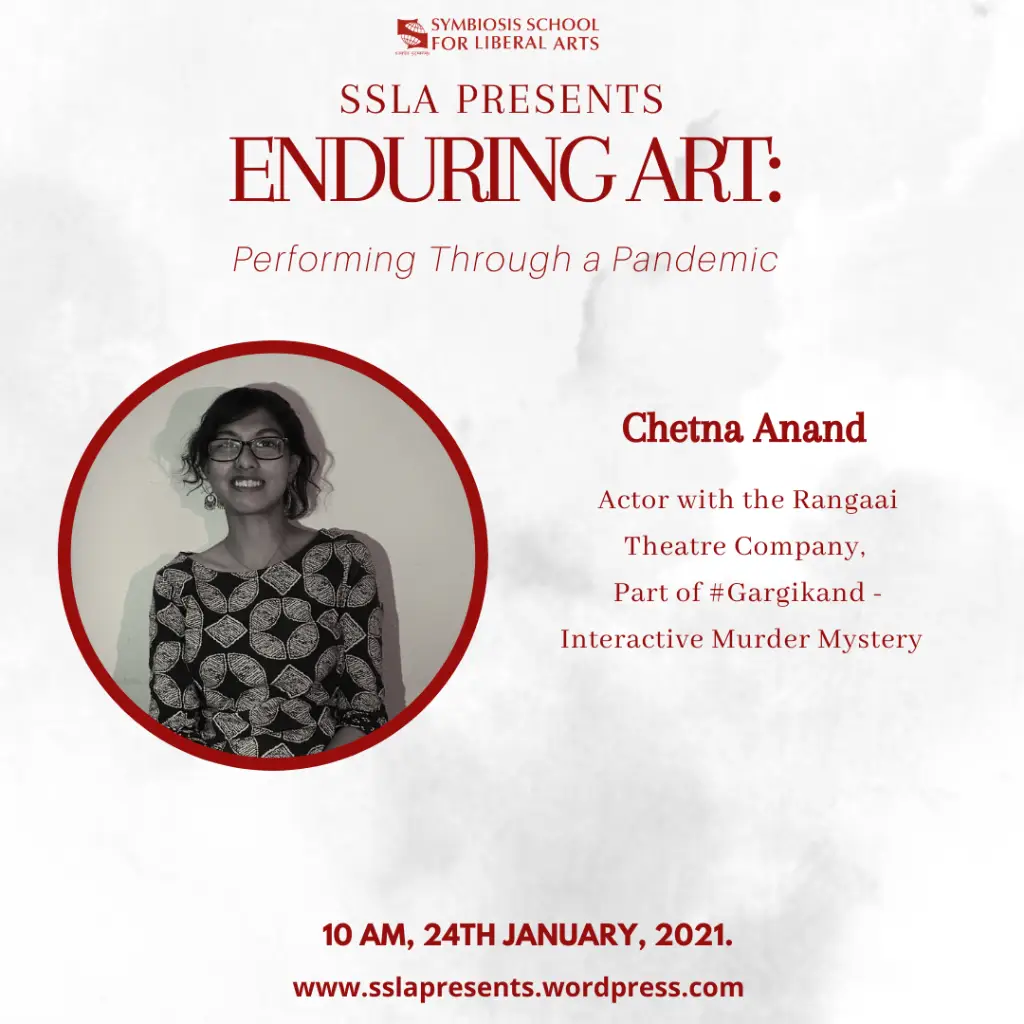
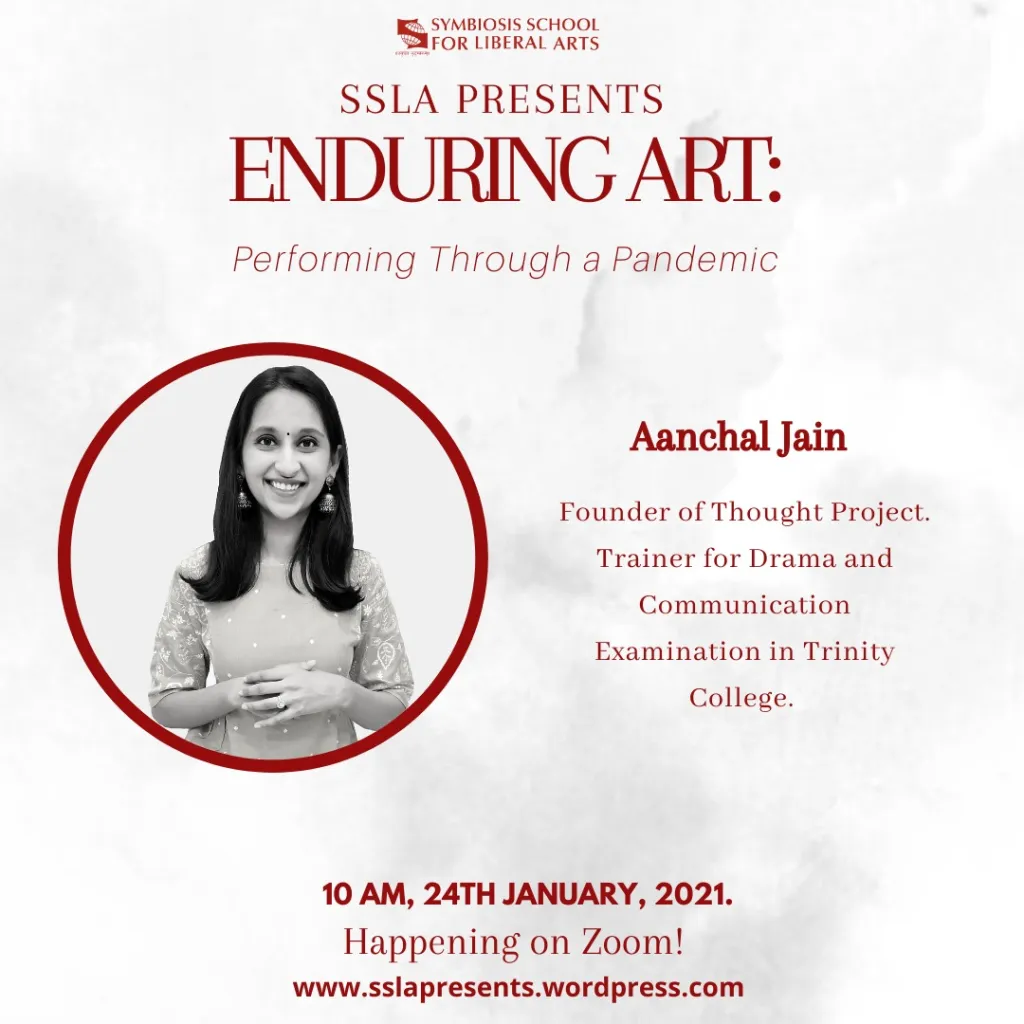
In these troubled times, you may have found yourself reaching for art- as a form of escape, as a tool of information or even as a means of finding common ground with people. But is the art you consume simply a response to these circumstances or is its form the natural culmination of a twisted trajectory? What happens after the pandemic?
Aanchal Jain, Ashutosh Potdar, Chetna Anand, Masoom Parmar, Nivedita Poddar, and Sudhanva Deshpande will explore these spaces as creators, curators and distributors of art. The mutation of art is difficult to engage with, given its resistance to standardization. The goal of such explorations then, is not to arrive at a simple understanding of art but to familiarize oneself with its cycles of change. During this panel, each speaker will offer their interpretation of art during a pandemic, fashioned through their own experiences of performing. They will discuss the exclusivity and accessibility of art, the vulnerability of performing bodies and the realization of mobility in a policed space. The panel will also question the embodiment of post-pandemic art. Certain variations will persist among others, and each artist must grapple with the fear of this.
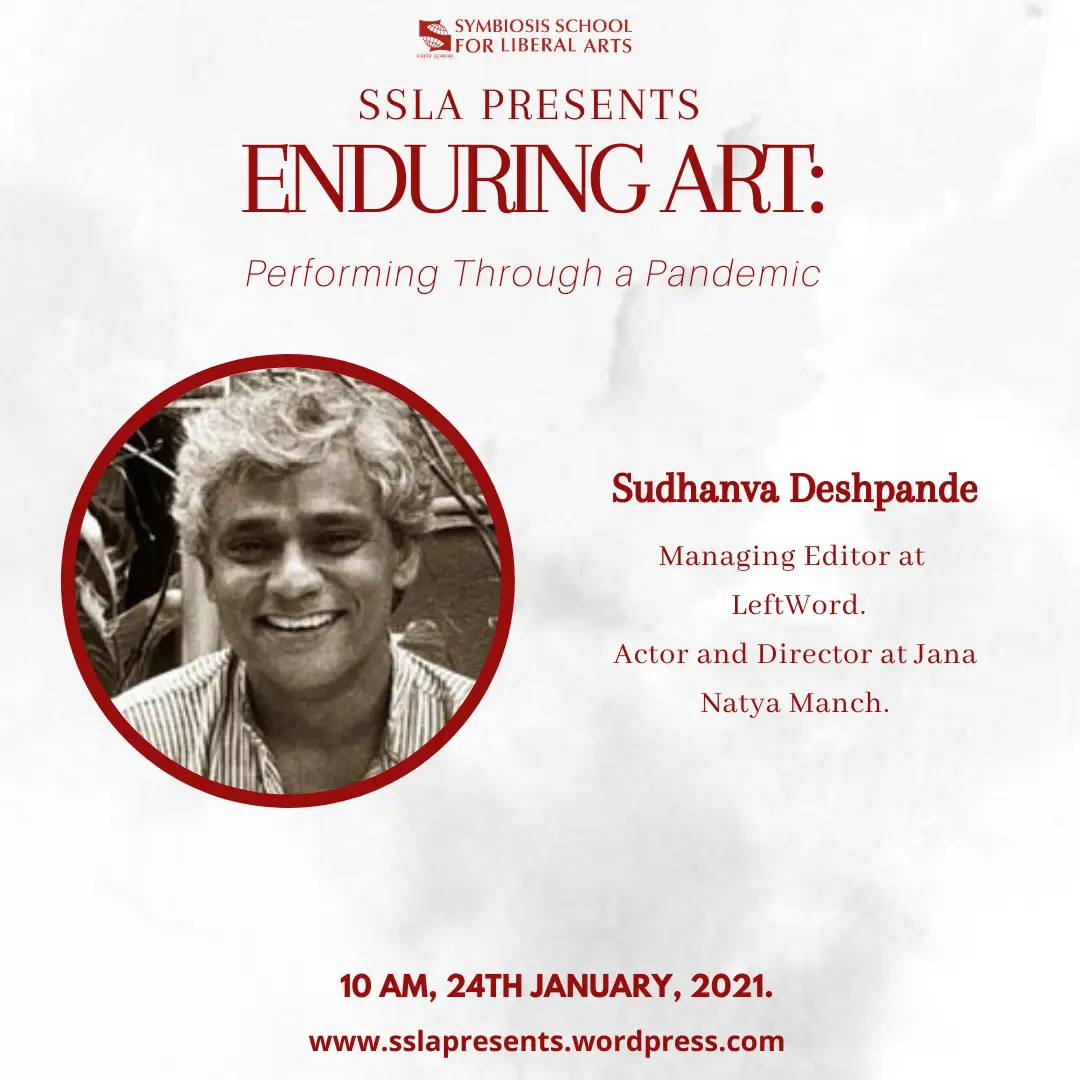
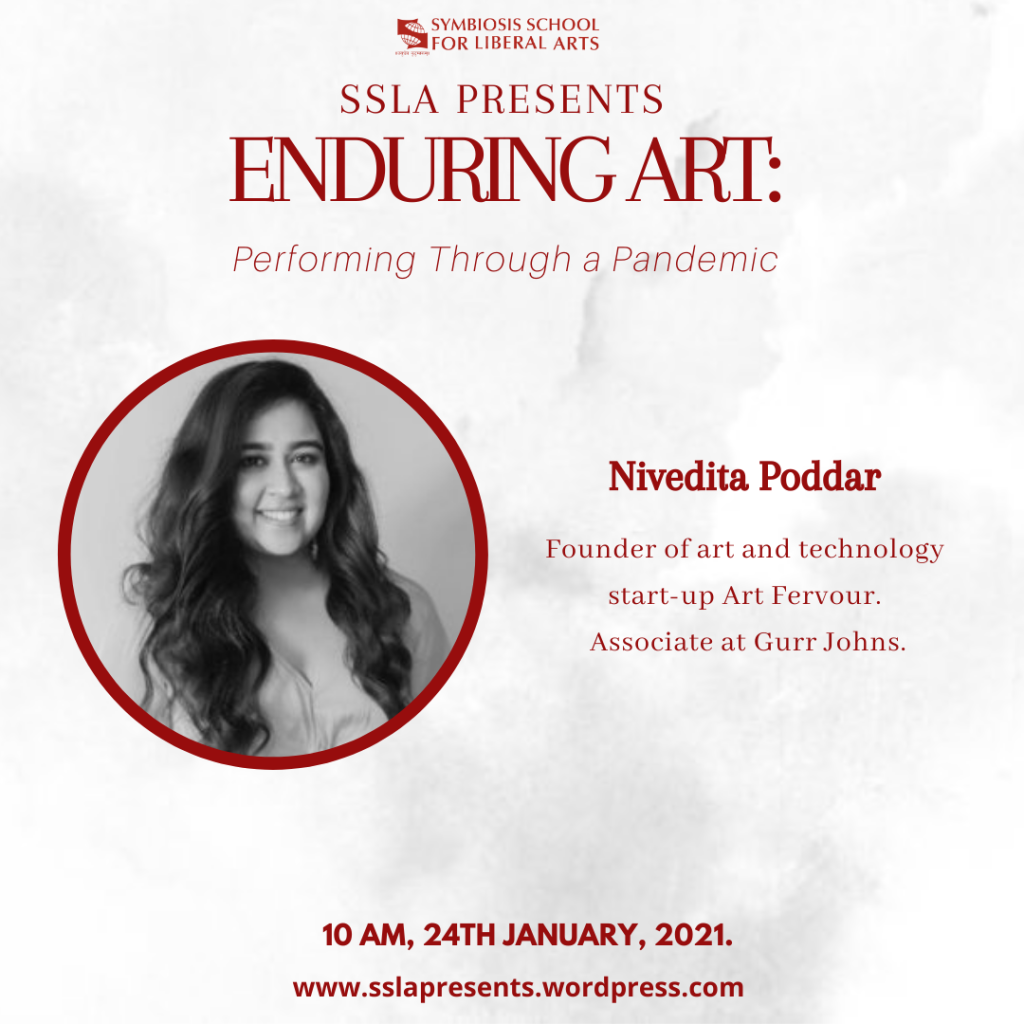
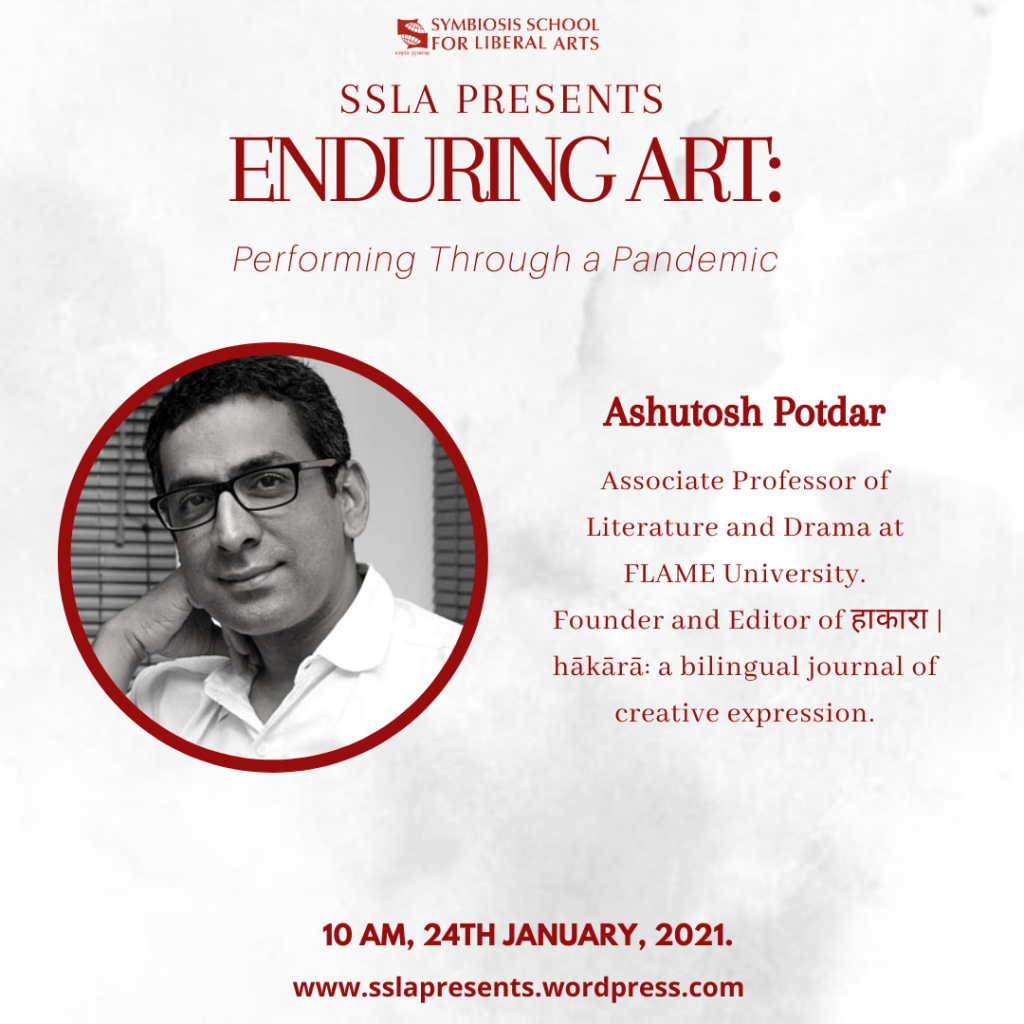
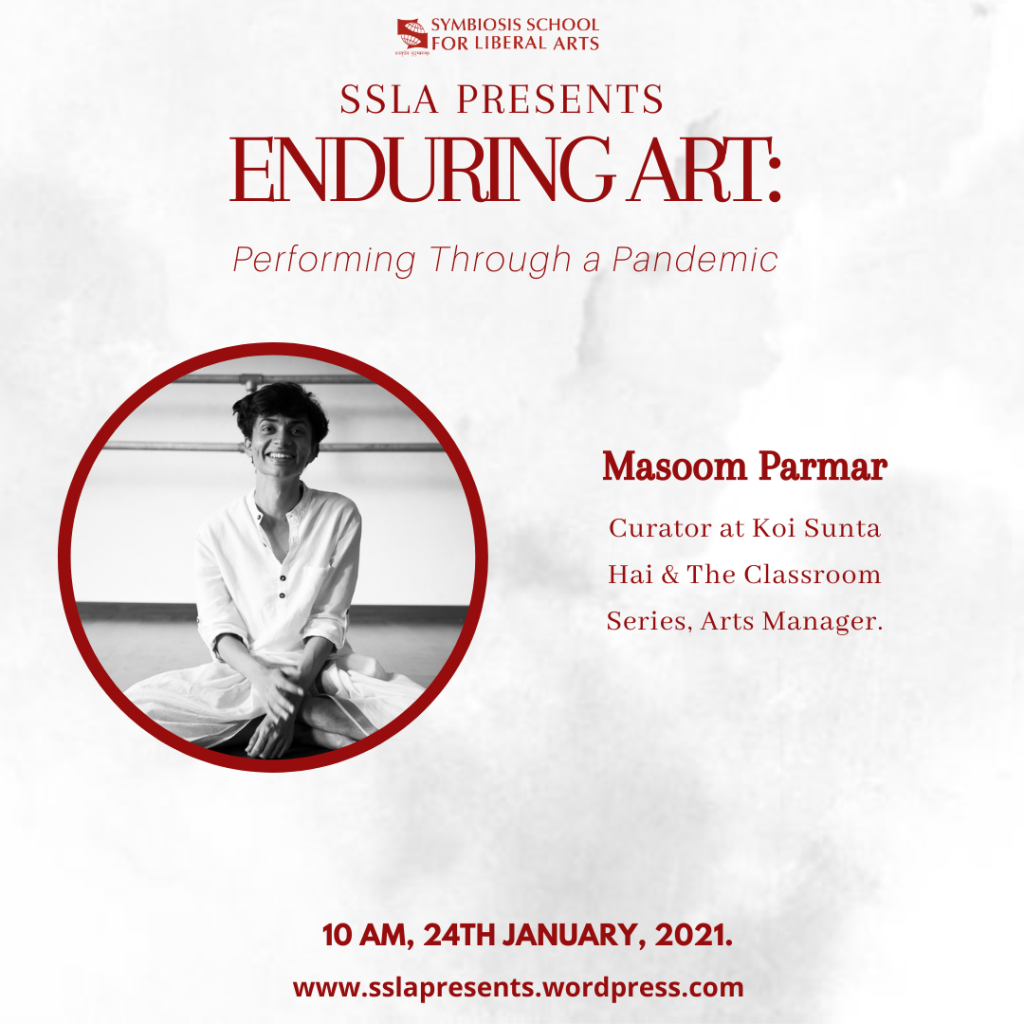
As we head into the new year and bring to you a new iteration of SSLA Presents, we think it’s worthy to undertake a short view back to the past and take stock of the riveting performances that have come before us.
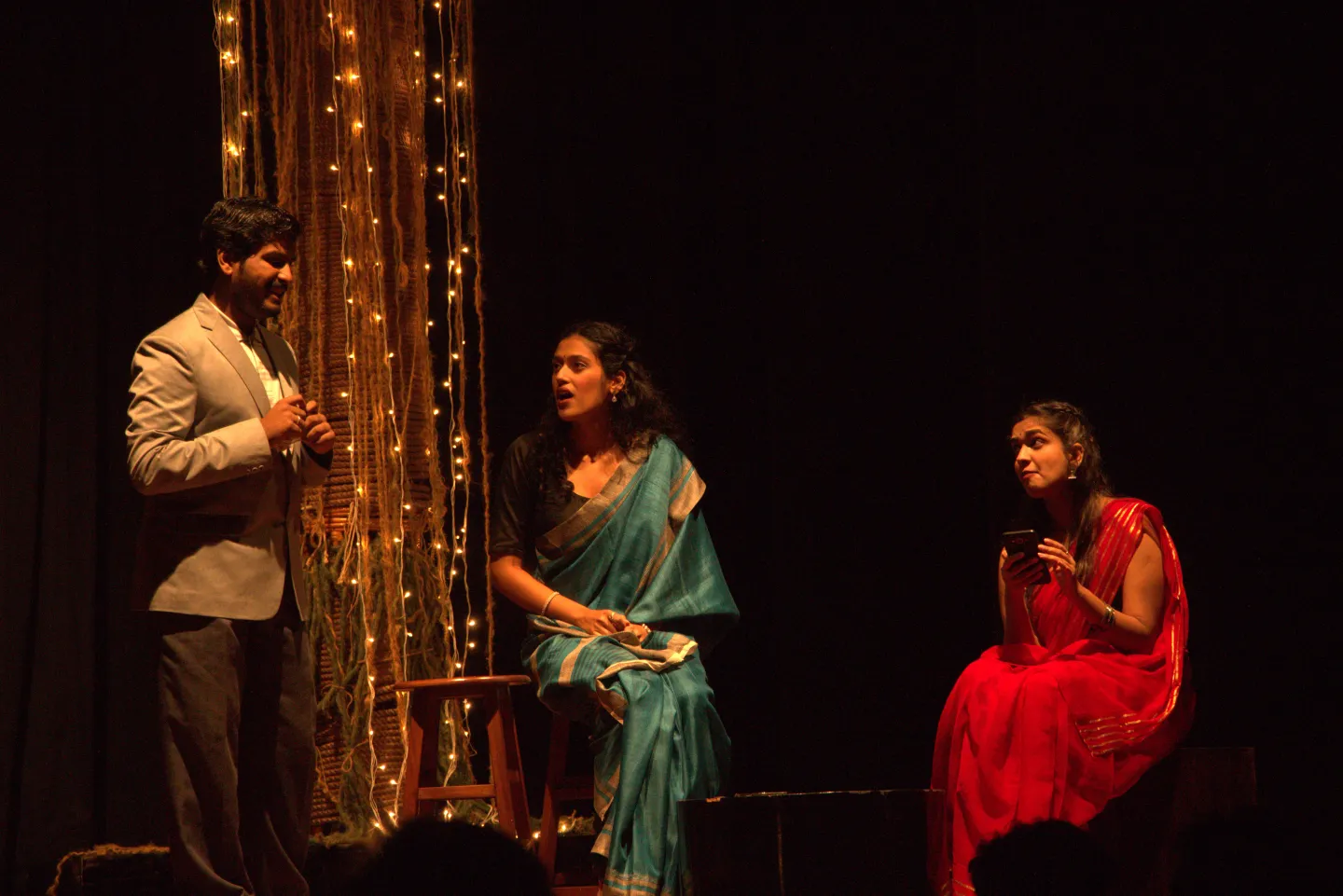
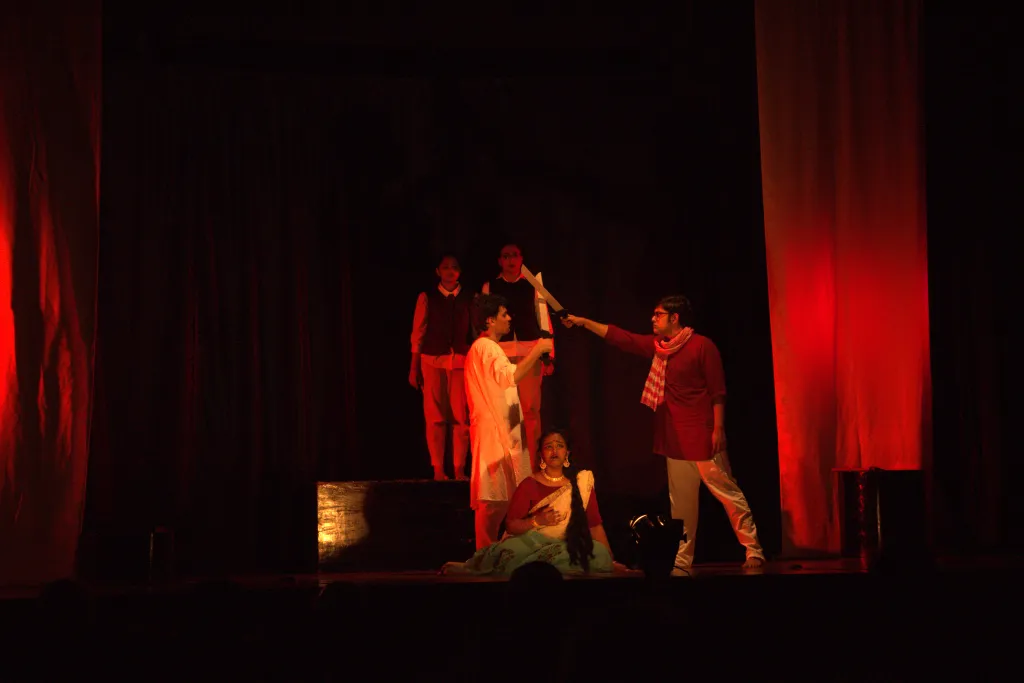
Directed and conceived by Dr. Suchetana Banerjee, both the plays by Girish Karnad introduced an interesting dichotomy in the tradition of SSLA Presents. For the first time, there was a parallel staging of two plays in two different languages, which also meant that they were to have completely different production processes. The production for Boiled Beans on Toast which was an English play involved a heavy usage and manipulation of quite a lot of props, to account for the multitude of scenes with different requirements. There was some homogeneity to this as most of the props were kept on stage to ease scene arrangements. Hayavadana which was originally in Kannada was staged in its Hindi translation. This play involved minimal use of props and had simple stage arrangements. Curtains on stage were manipulated on the most part to account for quite a lot of scene requirements. Both the plays involved the use of live music: while Hayavadana heavily relied on music, in order to get major plot points across, Boiled Beans on Toast on the other hand had a more minimal music set up with the play being concluded on a musical note by the entire ensemble.
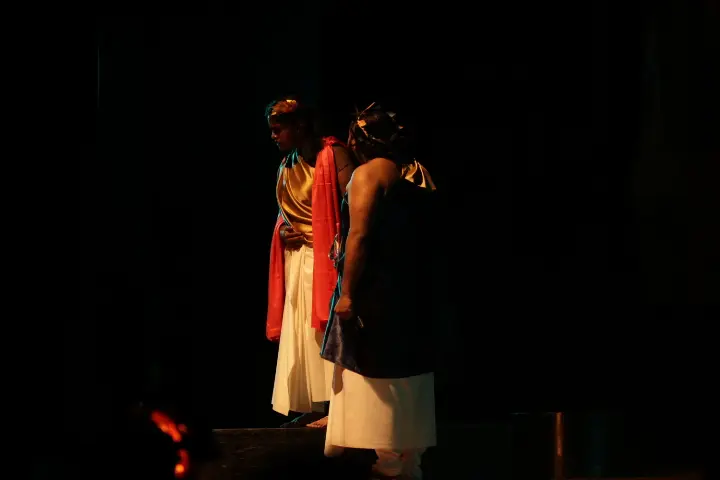
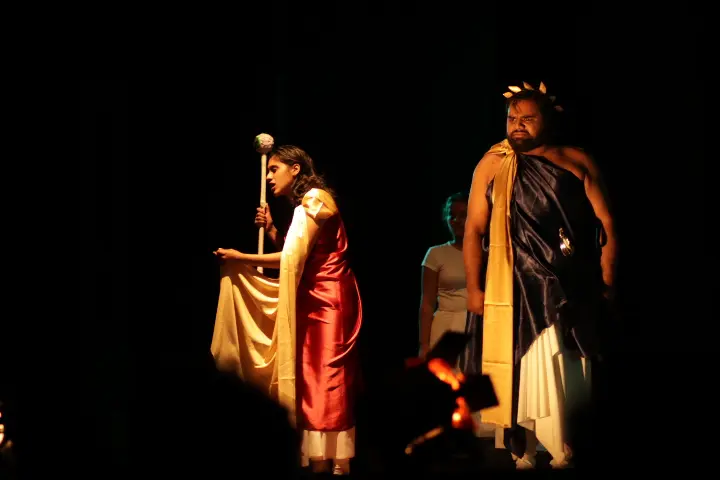
For its third production, SSLA Presents went back to the roots of Western theatre and put up two Greek tragedies, Oedipus Rex by Sophocles and Medea by Euripides. Oedipus Rex was produced similar to how a Greek tragedy would look like while Medea was re-written with original musical elements. Professor Ananya Parikh states, “With Oedipus and Medea, the pleasure was to produce two plays simultaneously which would, in a way, challenge each other…Oedipus was supposed to be set in the past, trying to replicate what it would have been on a Greek stage more or less and Medea was of course a complete re-thinking… Medea becomes like this musical and Oedipus uses music but continues to hold onto the Greek traditions of what we know from readings of Aristotle about how those plays were done”.
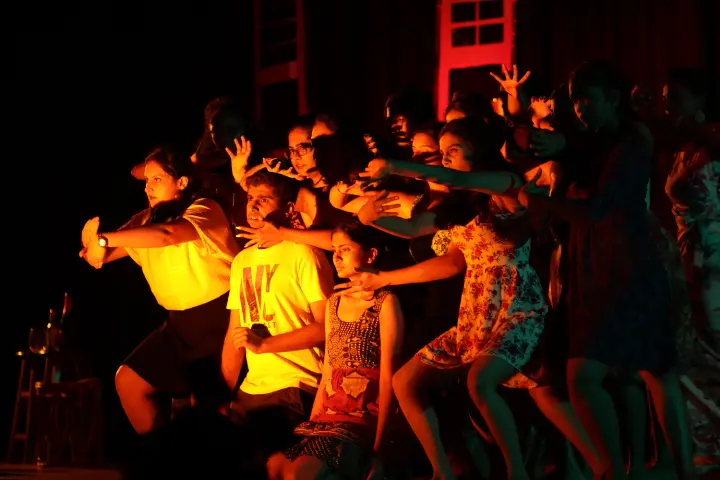
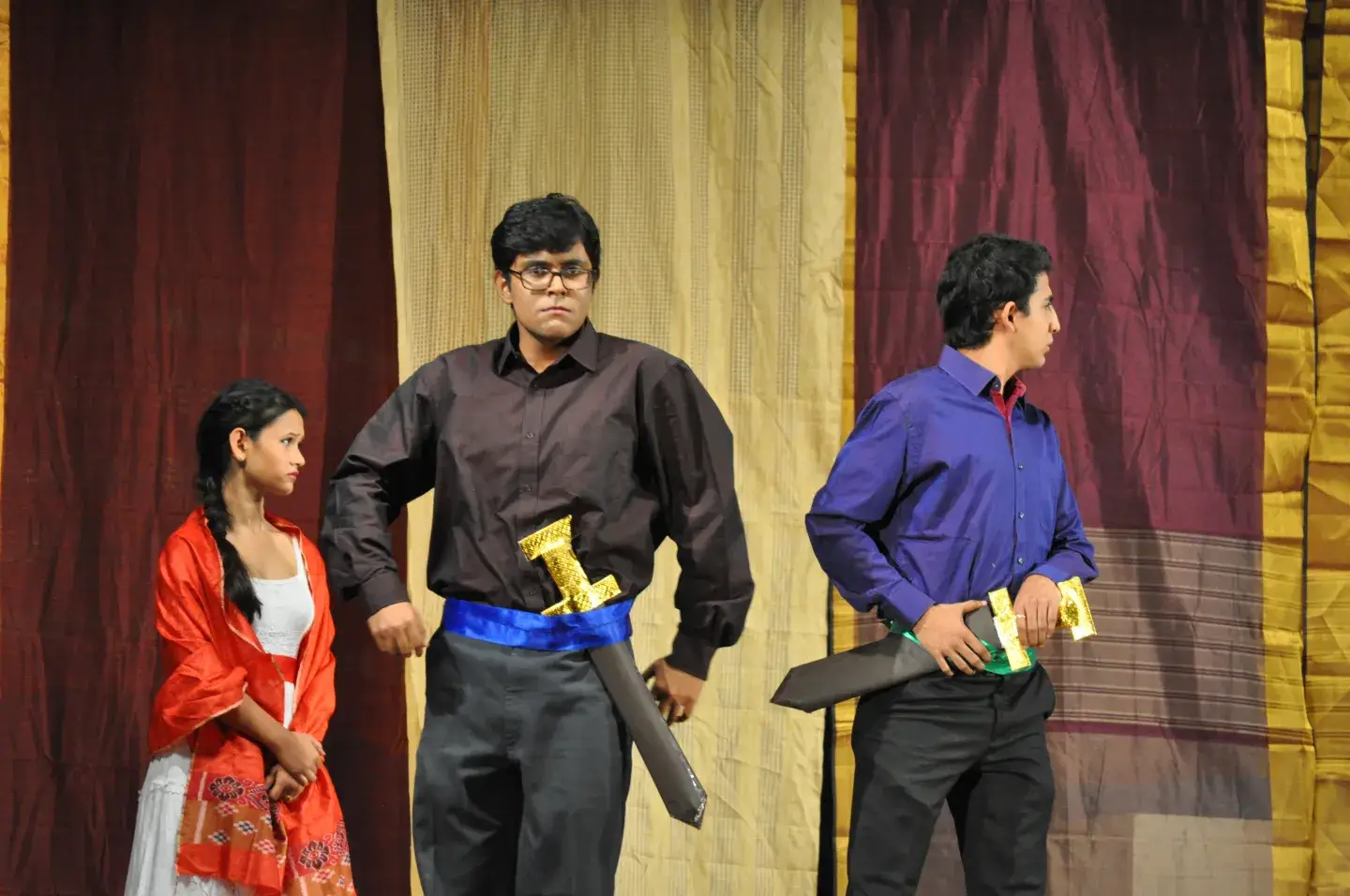
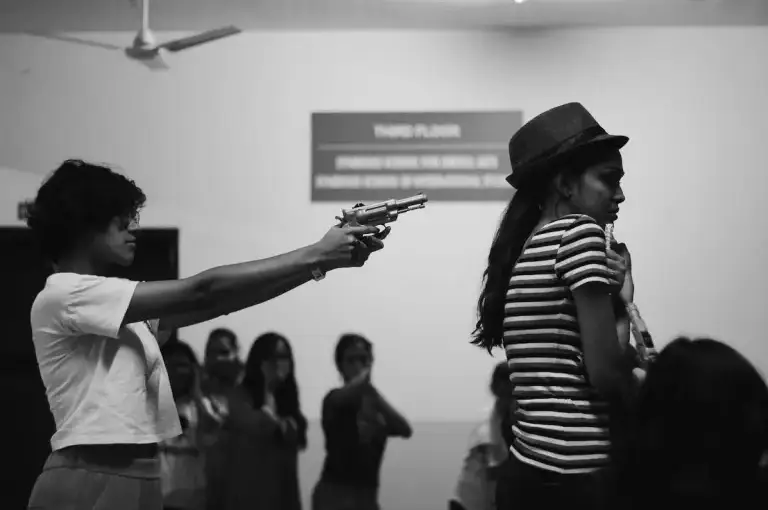
On the face of it, the play tells the story of a gangster, Arturo Ui, as he seizes control of the vegetable trade in Chicago and neighboring Cicero, Illinois, but in essence Brecht’s play is a satirical allegory of the Nazis’ rise to power. The team’s idea, as described by Prof. Ananya Parikh, was to find a way to make a theatre that was meant to be provocative and political, relate to the audience without losing its ideological base. With a way of imagining the body and design very different from Shakespeare, the execution happened to be through a series of actions that the production and acting teams came up with.

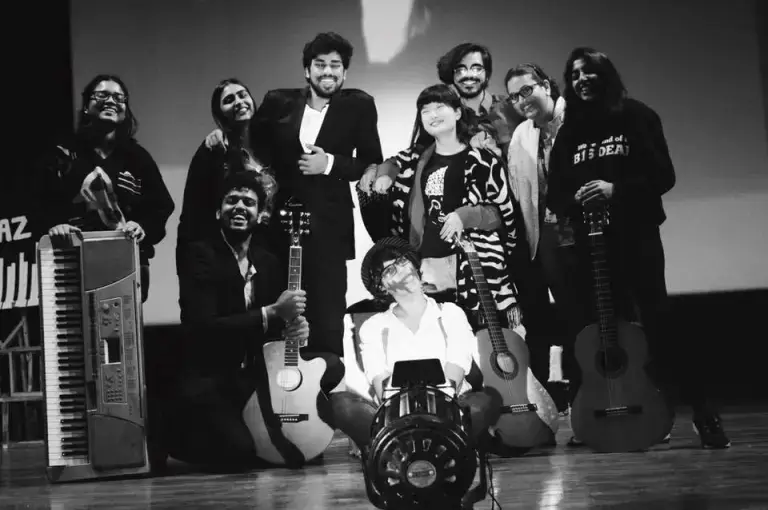
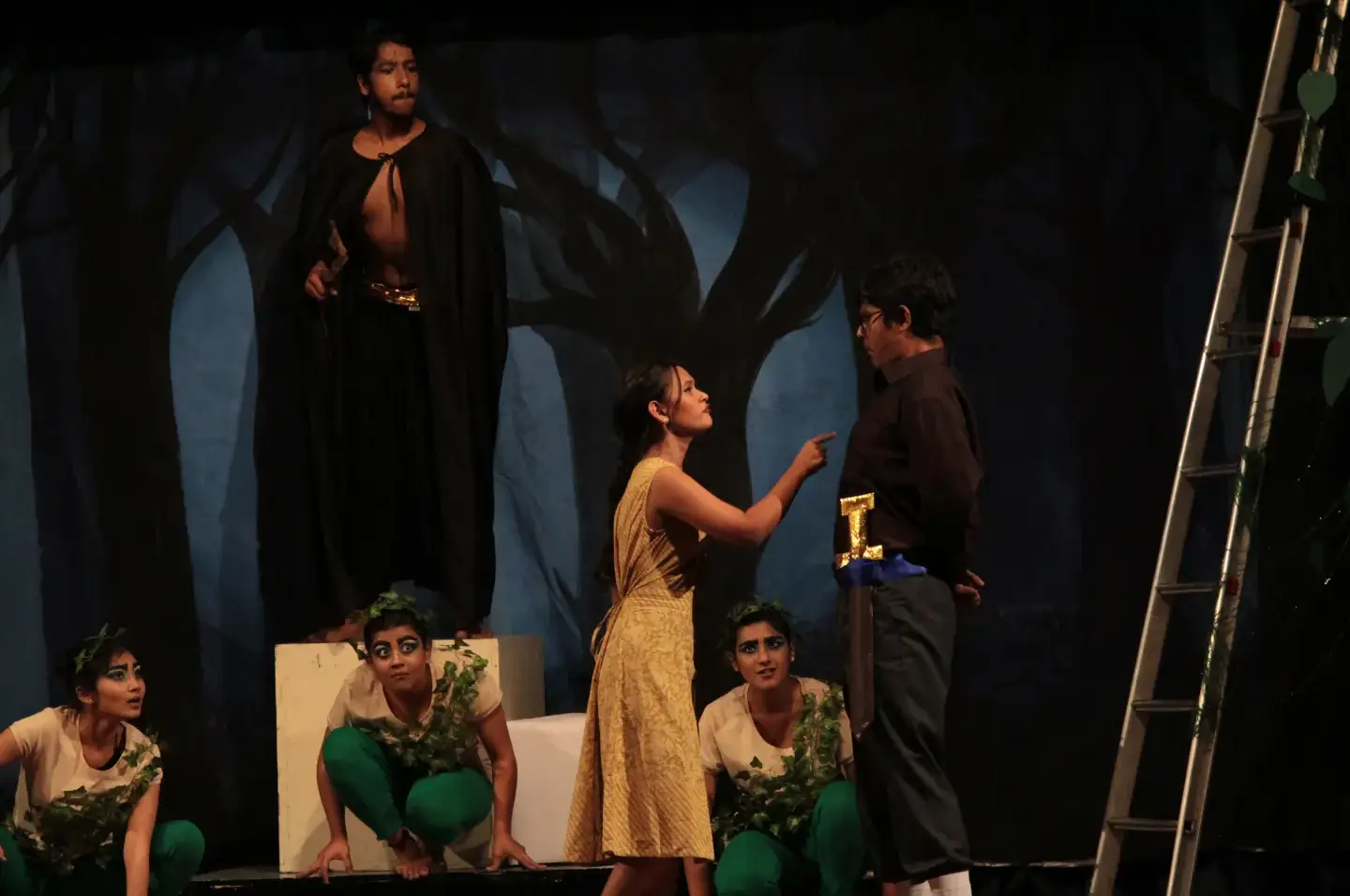
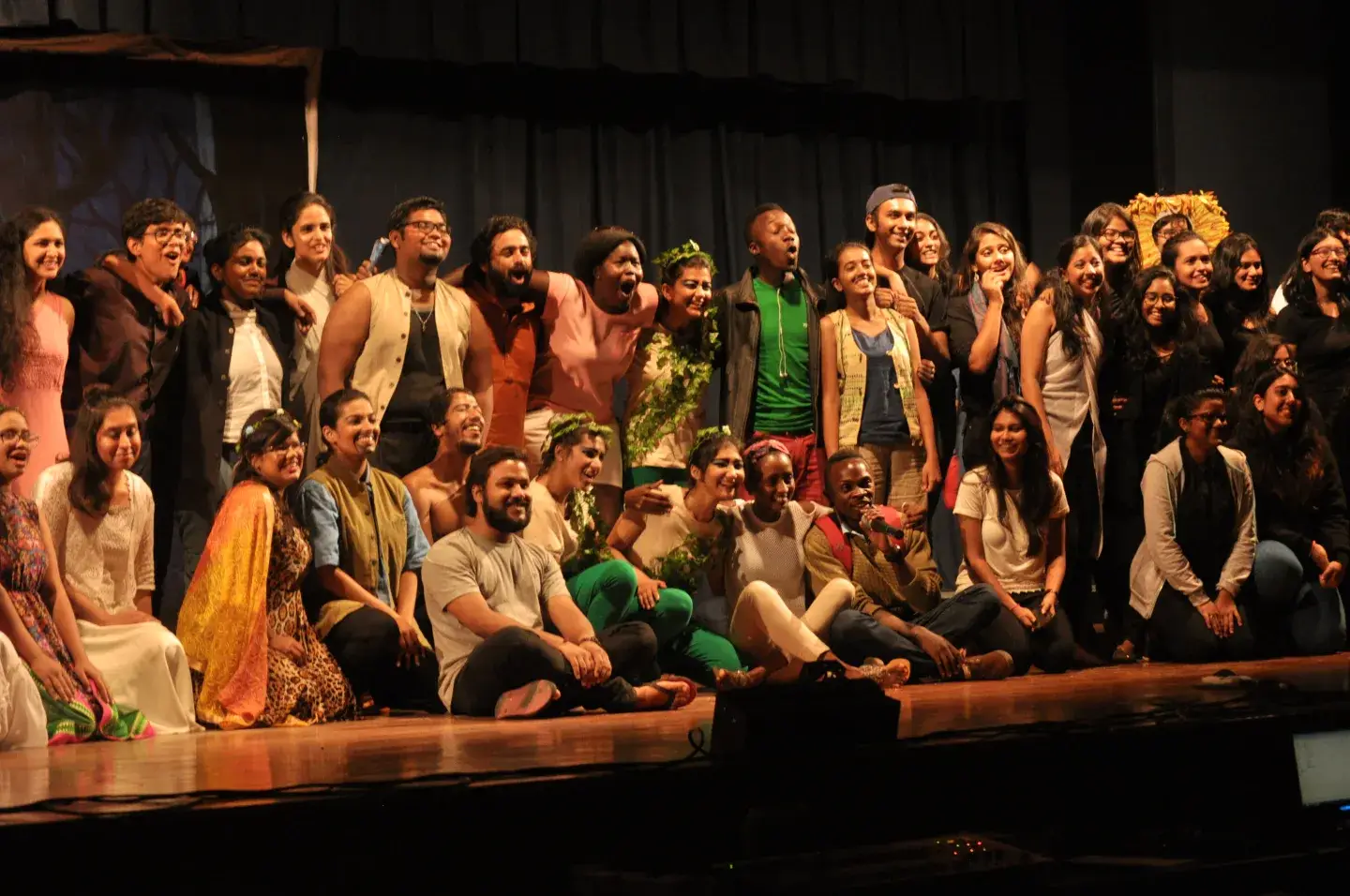
The first production under the banner of SSLA Presents, A Midsummer Night’s Dream, revolved around the marriage of Theseus and Hippolyta and the greater idea of love. The SSLA production delved into the dreamy spectacle of the Shakespearean comedy, with Professor Ananya Parikh noting that it was a conscious aesthetic choice to make the production spectacular “right from the start”. The community effort poured into the very first production of SSLA set the unmistakable tone for the years to follow.