


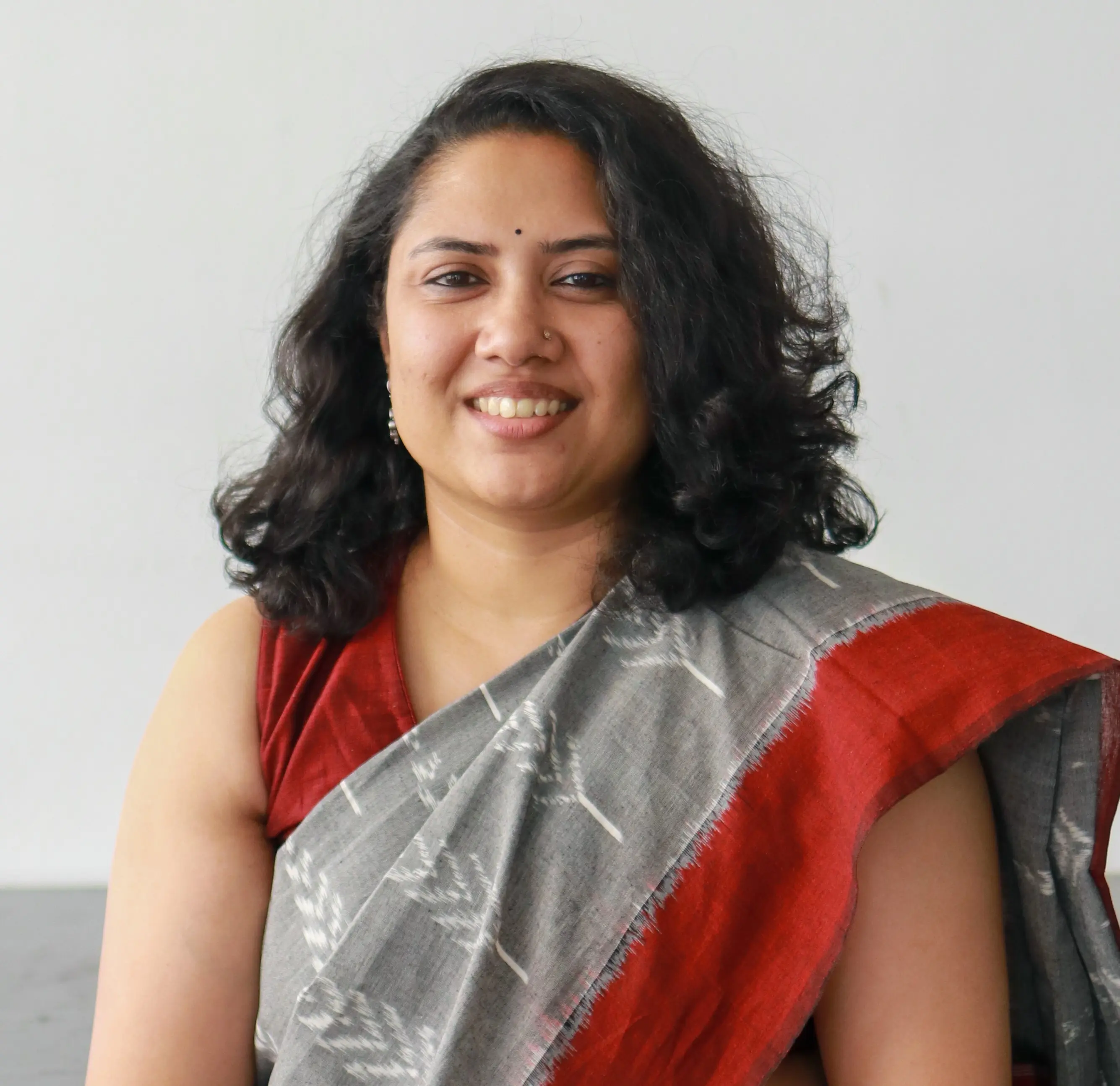
Assistant Professor
Anthropology
 manjari.jonnalagadda@ssla.edu.in
Teaching has made me an ardent learner, allowing constant questioning and exploration of new ideas, advancements, and frameworks, enhancing my understanding of fundamental and seminal concepts. My teaching philosophy is centred on creating a co-constructed collaborative learning space wherein, I as a facilitator guide students in understanding disciplinary content and help connect concepts to broader theoretical and societal questions. Through inquiry and activity based learning, I believe in mentoring students to cultivate their intellectual curiosity, analytical and critical thinking skills.

Dr. Manjari Jonnalagadda is currently serving as an Assistant Professor at the Symbiosis School for Liberal Arts (SSLA), SIU, Pune. She has a Ph.D. in Anthropology from Savitribai Phule Pune University (SPPU), Pune, specializing in Biological Anthropology. She is the recipient of the Homi Bhabha Fellowship (2026-2028) and SERB, Early Career research Award (2016-2020). Her research focuses on understanding the evolution of complex traits among Indian populations using phenotypic, genetic and evolutionary perspectives. Her current projects focus on unraveling the role of myriad factors contributing to evolution of complex traits of skin pigmentation and vitamin D in Indian populations. She also works in the domain of personalized medicine through the analysis of genes and genetic variations involved in drug metabolism.