


Academic Profile

Dr. Manoranjan Ghosh

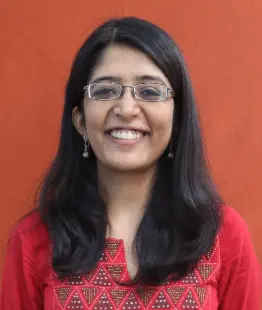
Dr. Sumithra Surendralal

Assistant Professor

Physics and Mathematics

Email icon sumithra.surendralal@ssla.edu.in

Teaching Philosophy

Sumithra aims to cultivate a disposition towards making rather than merely consuming; whether that means constructing a mathematical model, developing an argument, designing an investigation, or creating a new way of understanding a problem. She hopes students come to appreciate the difference between encountering a finished idea and participating in the work of coming up with, testing, and refining one. Such work requires imagination and a willingness to ‘play’. Far from being opposed to rigour, play is often what allows new questions, connections, and possibilities to emerge.

Introduction icon

Bio

Sumithra Surendralal is interested in how models help us make sense of complex phenomena. Trained as a physicist, her work began with computational studies of biological sequence generation, and has gradually expanded to questions about how modelling is learned, taught, and used in scientific inquiry. Across both research and teaching, she is interested in how representations help us move from observation to explanation. In her doctoral research at The Pennsylvania State University, she studied the structure of songbird songs, using probabilistic models to infer the hidden mechanisms that gave rise to observed vocal sequences. While situated within neuroscience, this work also drew on concepts closely related to those used in computational linguistics and language modelling. More recently, her interests have turned to modelling as a scientific practice and an educational goal. She is particularly interested in how students learn to build and use models of the real world, and in how the practices of scientific inquiry can be made accessible to learners.

Introduction icon

Publications

  1. Surendralal, S., & Menon, V. R. Modelling the unfamiliar: Structuring simulation-based activities to support liberal arts undergraduate students' understanding of complex systems. Proceedings of the International Conference on Technology 4 Education 2025 (with publishers)
  2. Lu, J.*, Surendralal, S.*, Bouchard, K. E., & Jin, D. Z. (2025). Partially observable Markov models inferred using statistical tests reveal context-dependent syllable transitions in Bengalese finch songs. Journal of Neuroscience, 45(9). (* equally contributing authors)
  3. Surendralal, S. (2023). Fiction and philosophy of science: Paired readings for the science classroom. Resonance: Journal of Science Education, 28(7), 1065–1073.
  4. Lu, J., Jin, D. Z., Surendralal, S., & Bouchard, K. (2022). Revealing context dependence through partially observable Markov model. Bulletin of the American Physical Society, 67.
  5. Surendra Lal, S. (2016). Statistical inference of syntax from vocal sequences and implications for neural mechanisms (Doctoral dissertation).
  6. Surendralal, S., & Jin, D. Z. (2014). A model of songbird song syntax using Bayesian nonparametrics. Bulletin of the American Physical Society, 59.
Introduction icon

Education

  • PhD in Physics, The Pennsylvania State University (2016)
  • MSc in Physics, Department of Theoretical Physics, University of Madras (2009)
  • BSc in Physics, Women’s Christian College, University of Madras (2007)
Introduction icon

Courses Taught

  • Liberal Arts Core: Explorations in Natural Sciences (co-taught with Vasudev Menon); Quantitative Reasoning 1 (Mathematics and Statistics); Research Methodology III (Mathematics and Statistics);
  • Physics: Classical Mechanics; Waves, Light, and Electromagnetism; Mathematical Methods in Physics; Thermal and Statistical Physics;
  • Mathematics and Statistics: Foundation Course in Mathematics and Statistics; Calculus; Linear Algebra; Graph Theory; Mathematics for Machine Learning;
  • Computer Studies: Theory of Computation;
  • Elective: Science as Muse: Intersections of Science and the Arts