



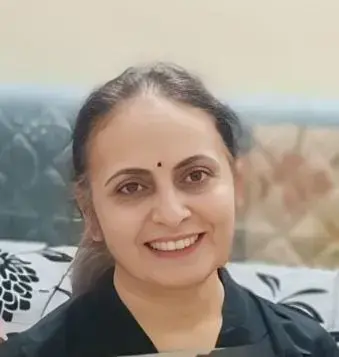
I believe teaching is as much about learning together as it is about facilitating learning in ways that nurture students' academic lives. In a Liberal Arts classroom, I engage with Feminist Pedagogies, thereby drawing from frameworks that mainstream empathy and justice-related issues in discourse, research and community engagement. Such pedagogies require that concepts not be treated as 'given', and that vocabularies and expressions be built on unambiguous connections among theory, research and experience. It is important to enable a class environment that encourages questioning and analysis. Learning does not begin and end in the classroom or with textbooks, and it needs connection and informal discussions. Hence, it is good if students follow you occasionally to your cabins to discuss their thoughts and ideas or engage in informal interactions in the corridors, to nourish their learning experience.

Dr richa minocha is an environmental anthropologist, a gender practitioner, a social worker, a political ecologist, and a teacher and researcher. She works as an Associate Professor with the Symbiosis School for Liberal Arts (SSLA). Under her collaboration with Prof Howard Rosing, a DePaul Professor, for her elective course on Politics of Ecology, she engages critically with food, water, and gender justice concerns. She has been proactively cultivating collaborations and associations with NGOs such as Karunya Care Centre, Society of Christ Jesus and MaherAshram and Acwadam in Pune; and YWCA (Young Women’s Christian Association) of Simla. She also collaborates with faculty and research associates at Savitribai Phule Pune University (SPPU) and Centre for Women’s Development Studies (CWDS) in Delhi for evolving feminist methodologies and pedagogies and contributing to gender-sensitive campuses. Richa has been a core in-country faculty for the program Rethinking Food Security: People, Agriculture and Politics under the International Honors' Program (IHP), a study abroad program offered to students of American Universities. She is the Member Secretary and a Founding Member of a grassroots-level organisation called Jan Abhiyan Sanstha (JAS), working on issues such as food security, livelihoods, gender, and disaster prevention in the Himalayan region. She has been a post-doctoral fellow at the London School of Economics and Political Science for her research on ecological, cultural and gendered dimensions in development.

Books
Book Reviews
Chapters in Books
Research Papers in Journals
Creative Pieces
Editorials


Electives
Core Courses
Major/Minor Courses
Women & Gender Studies
Sociology
Multidisciplinary Courses
Offered and guided Seminar Papers on the following themes

